Through 2011 I was asked by my business partner Charlotte Watts to contribute to the exercise chapter of “The De-Stress Diet” book written by Charlotte and award winning journalist Anna Magee. Of course I jumped at the chance to help the world get, stay and enjoy being fit and healthy.

The book officially launches on Jan 2/12!!!

You can find it on our new website De-Stress Your Life.

This site includes free tools to guide you through the book including videos and audios. A shop to order food, videos and other items from the book as well as free yoga and exercise directories.

Share this:
Share this page via Email Share this page via Stumble Upon Share this page via Digg this Share this page via Facebook Share this page via Twitter

read more

There is much debate at the moment regarding the body weight of women like Kate Middleton, The Duchess of Cambridge and Leanne Rimes the popular US country music singer. Are these young women healthy and fit or not? My friend and colleague Nutritional Practitioner and Personal Trainer Ian Craig addresses the “Thin is fit” notion………..

There is a prevailing dogma within the health and fitness industry that deserves some serious discussion. We are in an era of ‘thin is fit’, which perhaps stems from the fitness boom of the 1970’s and 80’s when the mass public of the Western World started running marathons and watching their dietary fat intake. The approach doesn’t appear to have worked particularly well but nonetheless, the increasing struggle with our waistlines has probably added to the perception that ‘thin is fit’.

So how do we become thin and fit? Well, if you follow the trends of the fitness clubs and popular health magazines, you will spend an hour per day on a treadmill or X-trainer and eat low-Calorie, low-fat food. The problem is that long-term, this approach is generally ineffective. The usual trend is for the body weight to initially drop, but to stabilise after a while. In an effort to drop more weight, the person may increase the cardiovascular exercise and further restrict the calories. This may or may not result in ‘thinness’ depending on the individual’s body type, but when you actually measure percentage body fat, it is often at surprisingly high levels.

Introducing Sarcopenia
Would you believe me if I told you that many skinny models are actually fat? They don’t look fat, but their body fat might exceed 30% of total body weight, compared to healthy levels of 20-25% for women and athletic levels of 15-20%. Looking at figure 1, both slim women appear the same, but one has a healthy body composition and the other a high percentage body fat plus accompanying health risks.

If you have done your maths, a bolstered fat-mass with the same body weight means a reduced muscle mass. There is actually a term for this; “Sarcopenia”, which in Greek means ‘poverty of flesh’! It is mostly used to describe the gradual loss of muscle mass as we get older,1 but is entirely relevant to individuals caught on the dieting/exercise cycle.

Of course, people who are outwardly overweight also often have depleted muscle mass and can produce some quite meagre strength outputs. In comparison, strength-based sports people (such as rugby and weight lifting) will often weight a lot, but are extremely lean because they carry a lot of muscle-mass.

Exercise for Fitness, not Fatness
If the high-Cardio, low-Calorie approach doesn’t produce the leanest, fittest body, then what does? Try combining some resistance exercise with CV training, along with appropriate eating patterns for your body type.

Resistance Training
Due to an increase in muscle mass, resistance exercise is thought to raise an individual’s metabolic rate. A meta-analysis and literature review have supported this viewpoint by observing that resistance exercise is effective in facilitating improvements in body composition, which may be due to its ability to increase or maintain lean body mass.2, 3 In my practical experience, resistance training, via free-weights, machine weights, circuits or core stability training can be an extremely effective and rapid way of improving body composition.

Cardiovascular Training
You may be mistaken in thinking after reading the previous paragraphs that CV exercise leads you into a state of Sarcopenia and puts your fat-loss efforts into jeopardy. CV training is often used as the base of a weight-loss programme: the respected American College of Sports Medicine (ACSM)4 recommends progressively increasing exercise to 3 – 5 hours of exercise per week. After-all, we were designed to move and traditional workers (like my shepherd example in the last edition) generally stay lean and fit into old age. The problem comes when Caloric restriction is maintained for prolonged periods along with heavy CV exercise – excessive strain is put onto the adrenal glands, pancreas and liver to support blood sugar levels without adequate fuel intake and metabolic suppression tends to follow.

What is the optimum intensity to do CV training at? 14 pre-menopausal untrained women demonstrated that exercise training at 45% of maximum oxygen uptake (VO2max) produced a greater weight loss than burning the same number of Calories at 72% of VO2max, whereas the higher intensity exercise tended to maintain muscle mass.5

Practical Recommendations
Based on the theory of fat-loss that I have presented to you, along with experiential observations, I would suggest the following: If you are already quite fit, aim for at least 3 hours of cardiovascular training per week (perhaps 2 hours of low- to moderate-intensity and 1 hour of high-intensity) and at least 1 hour of resistance training per week (2 X 30min sessions).

If you are starting from a low fitness base, the most appropriate approach may be to start with a low-intensity exercise such as walking. In this way, the programme will be achievable, doesn’t require specialised equipment and may be more successful than a formal exercise approach: compliance to exercise referral programmes can be as low as 31%.6 Over-weight individuals should aim to accumulate an hour of low-intensity exercise most days7 and tools like step counters and activity diaries may be helpful to boost adherence. Resistance-based exercise can be done by anyone and you can chose from formal weight-training, super-circuits (in most S African gyms) or Pilates and tone classes. The basic requirement is to use large muscle groups in a repetitive way until some fatigue is felt. Some sample weight training exercises are shown in Table 1.

Additionally, your exercise experience must be enjoyable: Activities such as dancing, swimming, cycling and exercise classes can be shared with family or friends. In addition to planned exercise sessions, spontaneous minor activity can account for 20% of the differences of energy expenditure in a 24 hour time frame.8 Therefore, general activity, such as house work, gardening, walking to the shops and taking the stairs instead of the elevator can be extremely accumulative.

Does Food Matter?
It is important to note before concluding this article that in my professional career, I have never helped an individual towards a ‘lean and mean’ body shape without some attention to their food intake. The fat-loss effects of exercise can be potentiated by the addition of an individual meal plan. For example, a meta-analysis of 493 studies showed weight lost through exercise, diet or diet plus exercise to be 2.9, 10.7 and 11.0 kg respectively for the period of study.9 At one-year follow-up, diet plus exercise tended to be the superior program, possibly due to maintenance of muscle mass.

For an effective ‘fit, not fat’ programme, many components of health should be considered. A comprehensive exercise programme which maintains or increases lean muscle mass should certainly be an integral part of your plans. In addition to potentiating fat-loss, you are likely to experience many of the considerable health benefits that I discussed in the last edition.

  • Table 1
    Weight Training Exercises for Fat Loss
    Squats or Leg Press
    Bench Press or Chest Press
    Bent-Over Row or Seated Row
    Lunges or Step-ups
    Ab Crunchies on a Fit Ball or Floor
    Back Extensions on a Frame or Floor

Complete 2-3 sets of 8-12 repetitions for each exercise. After a 2-4wk period of getting used to the exercises, choose a weight that produces failure within 12reps in your final set. If you are new to weight training, I thoroughly recommend seeking a good Personal Trainer to get you started.

Ian has more than 20 years’ experience as a competitive Middle Distance runner and is now a recreational triathlete. He studied Exercise Physiology to MSc level in America, before qualifying as a Strength and Conditioning Specialist and spending several years as a Personal Trainer and Coach. Now a Nutritional Therapist, he integrates the two, often disparate, fields of Sports Nutrition and Nutritional Therapy in an applied way so that both health and performance of athletes are considered. He leads and lectures on the Competitive Athlete post-grad programme at CNELM (The Centre for Nutrition Education and Lifestyle Management) during his annual trips to the UK. Now based in South Africa, Ian lectures at Stellenbosch university, runs nutrition clinics and workshops and coaches runners and triathletes. www.craigcoaching.com Ian has nutrition and coaching practices in both London and South Africa. Reach him at ian@craigcoaching.com www.craigcoaching.com

References

1. Marcell TJ, Sarcopenia: Causes, Consequences and Preventions. Journal of Gerontology 2003; 58A(10): 911-916.
2. Ballor, DL & Keesey RE, A meta-analysis of the factors affecting exercise-induced changes in body mass, fat mass and fat-free mass in males and females. Int J Obes 1991; 15(11): 717-726.
3. Votruba SB et al, The role of exercise in the treatment of obesity. Nutrition 2000; 16(3): 179-188.
4. Jakicic JM et al, American College of Sports Medicine Position Stand. Appropriate intervention strategies for weight loss and prevention of weight regain for adults. Med Sci Sports Exer 2001; 33(12): 2145-2156.
5. Mougios V et al, Does the intensity of an exercise programme modulate body composition changes? Int J Sports Med 2006; 27(3): 178-181.
6. Hillsdon M & Thorogood M, A systematic review of physical activity promotion strategies. Br J Sports Med 1996; 30(2): 84-89.
7. Leermakers EA et al, Exercise management of obesity. Med Clin North Am 2000; 84(2): 419-440.
8. Dauncey, MJ, Activity and energy expenditure. Can J Physiol Pharmacol 1990, 68(1): 17-27.
9. Miller WC et al, A meta-analysis of the past 25 years of weight loss research using diet, exercise or diet plus exercise intervention. Int J Obes Relat Metab Disord 1997; 21(10): 941-947.

Share this:
Share this page via Email Share this page via Stumble Upon Share this page via Digg this Share this page via Facebook Share this page via Twitter

read more

Welcome

Welcome to my new website. I will ensure this site provides you with information to live a healthy lifestyle. Please return whenever you want.


Share this:
Share this page via Email Share this page via Stumble Upon Share this page via Digg this Share this page via Facebook Share this page via Twitter

read more

Getting ready for your wedding?  Just that question alone can make a bride-to-be stressed!  Not only is there planning to be done, families to be kept happy but also this driving need to “fit into” their wedding dress.  I will leave the first two elements to the wedding planners and life coaches out there and stick with what I know….the issue of weight loss.  Should a bride lose weight before her wedding?

Much media hype at the moment is of course about Kate Middleton getting ready for her wedding.  She looked wonderful, fit and healthy before the engagement and recently has started to shed body weight. My question as an exercise professional is why?  She looked and acted confident before she started dropping weight. Another celebrity in the limelight is American Country singer LeeAnn Rimes who has lost a lot of weight and in my opinion does not look better for it.  In my mind there was absolutely no need for either of these fit healthy women to lose anymore on the scales. My professional approach to health and fitness is to not use the scales but other measures such as girth measurements, energy and fitness levels and feelings of wellbeing. I will come to explain these later.

A very popular wedding planner has been quoted as saying that many brides lose weight in the lead up to their wedding because of the stress.  This may be true, but isn’t this supposed to be a happy day?  If a bride wants to be healthy and happy there are ways to look and feel great & combat stress!  I believe stress can be avoided by making positive choices, being organized and delegating tasks.

How to do this is the question?  I feel getting married is a great time to have a health/fitness goal to work towards. The reality is, no matter what anyone else says a bride will want to look and feel great on her day.  If she wants to be fitter, more toned and healthier she should start at least three months to a year before the month of the wedding.  There are scientific reasons for this.  Physiologically the body needs to have time to set new motor patterns, lay down muscle, shrink fat cells and develop healthier tissue.  This all takes much more than a month, which some brides feel is more than ample to get fit.  It’s not.

The benefits for starting as far away from the wedding date as possible are many. Regular exercise, meditation, yoga/pilates and other alternative health practices will keep stress at bay, keep energy levels even and feelings of emotional wellbeing positive. These things should be done consistently and regularly each week with a well-balanced nutrient rich food plan.  This will most likely result in girth measurements lowering, perhaps some weight loss, but not unhealthy amounts and a start on a healthier lifestyle for a lifetime past the wedding.  Imagine being a bride and actually enjoying the lead up to your wedding, feeling stress free and happy on the day itself and finally staying healthy and fit for years to come!

I strongly suggest that a bride does not focus on the numbers on the scales but on healthy goals such as girth measurements, how clothes fit and most importantly how she feels. As many people may have already read, muscle tissue weighs more than fat.  If one starts a fitness routine in the lead up to their wedding they will build new muscle which will most likely not show a change on the scales but will certainly allow them to feel more toned, energetic, stress free and have clothes feeling better.  A good way to think about this comparatively is to visualise two women of the same height and age, one being an athlete or regular exerciser and the other a sedentary (non-active) person.  The reality is that the former will be heavier on the scales because of having more muscle tissue than the sedentary woman but will look more toned, healthier and fit.  So in my professional opinion this means that the scales are negligible.  What do they really tell us if the heavier woman in our example looks and feels better?

One of my objectives as a Personal Trainer and Exercise Professional is to teach women how to discover that being healthy, fit and happy is not about the scales.  It is about living a full, active, well balanced lifestyle which makes you feel energetic and happy on a regular basis.  Have you ever stood on your scales and seen a number you liked or felt elated by what you saw? Most women I have worked with have never gotten the result they want.  This has to tell us something about using scales as a measure of ourselves or how we feel.

My hope is that by reading this article you will be able to make a start on the road to feeling better about yourself.  Not only in the lead up to your wedding day but for a lifetime.


First written for and published on The Butterfly Journal – an inspiring wedding guide by Pierre Carr

Photo by Sharron Goodyear on Free Digital Photos

Image: Sharron Goodyear / FreeDigitalPhotos.net


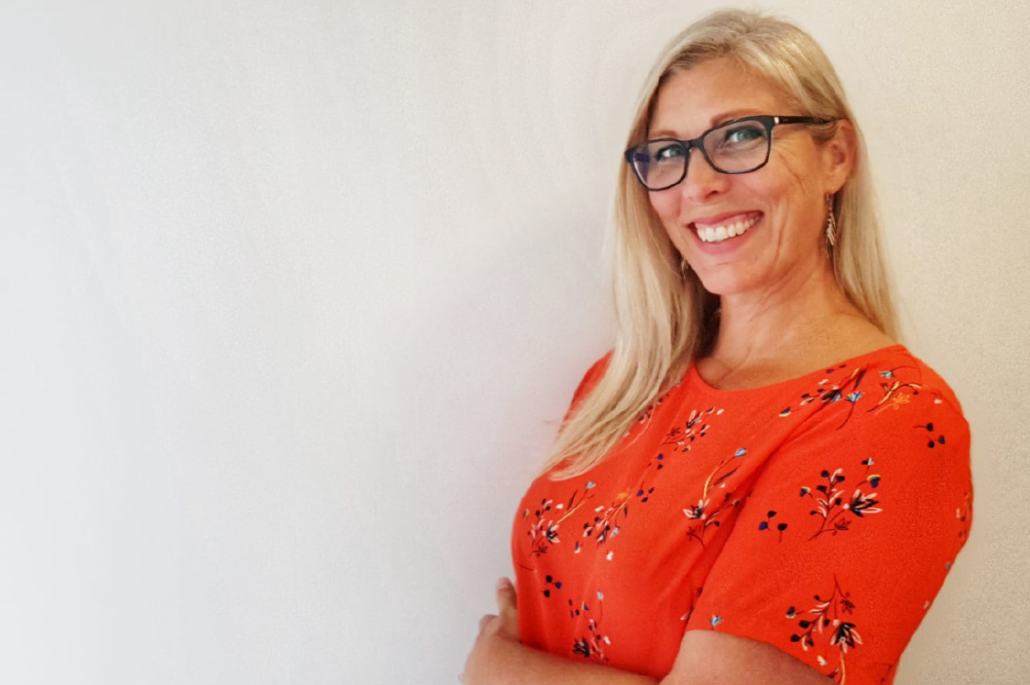
Charlene Hutsebaut is a Canadian Personal Trainer and Well-being Consultant living in London England. She has 17 years in the fitness industry holding degrees in both Physical Education and Education, is certified with the NSCA and is a Stott Certified Pilates Instructor. She educates people on exercise, nutrition, health issues and lifestyle changes. Her love of fitness has taken her around the world training clients privately in Portugal, New Zealand, Spain, Morocco and Italy. The exclusive inspa retreats company has also recruited her to work at their stunning venues in Tuscany, Marrakech and on the wild Moroccan Coast. She trains one to one clients in London, virtually via skype, has an online membership site www.positivelyslim.ning.com as well as Natural Health site www.santoshahealth.com Find her on Twitter & facebook under @positivelyslim
Share this:
Share this page via Email Share this page via Stumble Upon Share this page via Digg this Share this page via Facebook Share this page via Twitter

read more